Mouth Breathing Therapy

Your child was designed to breathe through their nose - we can help them get back to it.

Chronic mouth breathing isn't just a habit - it's a dysfunction that can affect facial development, dental health, sleep quality, and overall well-being. At BSPS, we help children and adults transition from mouth breathing to healthy nasal breathing through myofunctional therapy.

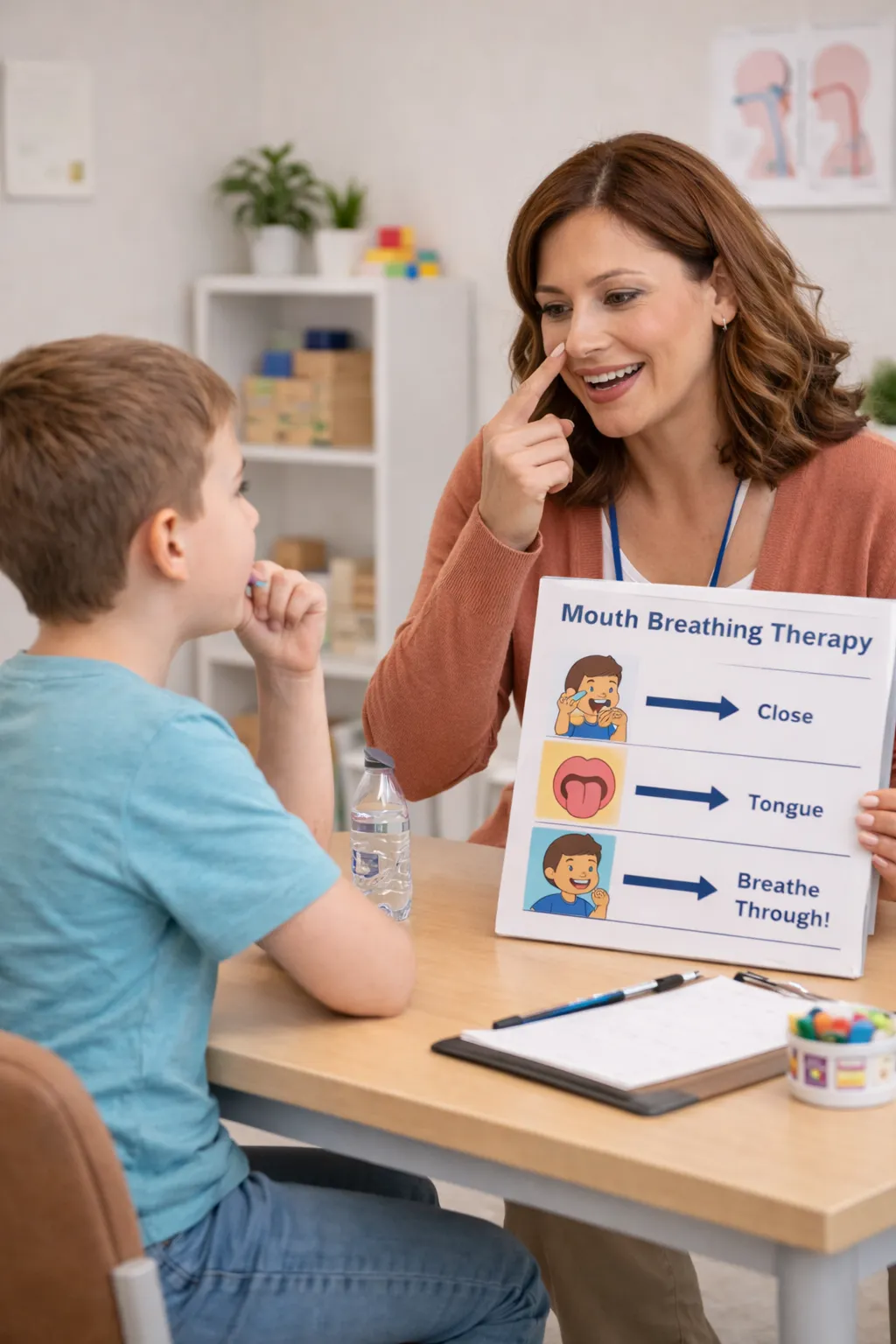
Speech therapy session using a breathing chart to address mouth breathing

Who This Helps

Mouth breathing therapy at BSPS helps children and adults who:

  • Breathe primarily through their mouth during the day
  • Sleep with their mouth open
  • Have chronic open-mouth posture
  • Snore or have noisy breathing during sleep
  • Have been identified with nasal obstruction or enlarged tonsils/adenoids
  • Experience frequent upper respiratory infections
  • Have facial changes from chronic mouth breathing (long, narrow face, recessed chin)

Signs of Chronic Mouth Breathing

  • Mouth hangs open at rest
  • Chapped, dry lips
  • Bad breath despite good dental hygiene
  • Snoring or noisy breathing during sleep
  • Fatigue, difficulty concentrating
  • Frequent upper respiratory infections
  • Narrow face or dental arch
  • Dark circles under eyes
  • Forward head posture
  • Restless sleep

Why Treatment Matters

Nasal breathing isn't just preferable - it's essential for health:

Nasal breathing:

  • Filters, warms, and humidifies air
  • Produces nitric oxide (important for health)
  • Supports proper facial and dental development
  • Promotes deeper, more restorative sleep
  • Maintains proper tongue posture

Chronic mouth breathing can contribute to:

  • Narrow dental arches and crowded teeth
  • Long, narrow facial development
  • Sleep-disordered breathing and sleep apnea
  • Reduced oxygen delivery to the brain
  • Poor sleep quality and daytime fatigue
  • Increased infections and allergies

What to Expect

Comprehensive Assessment

We evaluate your breathing patterns, oral posture, nasal patency, and related factors. If structural issues (enlarged adenoids, deviated septum) are suspected, we coordinate with ENT specialists.

Myofunctional Therapy

Therapy focuses on:

  • Establishing nasal breathing through exercises and awareness
  • Proper lip seal at rest
  • Correct tongue posture on the roof of the mouth
  • Breathing retraining during sleep and daily activities

Collaborative Care

We work alongside ENTs, allergists, orthodontists, and sleep specialists to address all contributing factors.


Our Approach

Mouth breathing therapy at BSPS includes:

  • Breathing retraining exercises to establish nasal breathing habits
  • Lip strengthening for proper lip seal
  • Tongue posture training to support nasal breathing
  • Sleep positioning strategies to reduce mouth breathing at night
  • Myofunctional exercises targeting the muscles involved in breathing

Progress requires consistent practice, but most clients notice improvements within weeks.


When Medical Evaluation Is Needed

Sometimes mouth breathing has structural causes that need medical intervention:

  • Enlarged tonsils or adenoids
  • Deviated septum
  • Chronic allergies or congestion
  • Nasal polyps

We'll help coordinate appropriate referrals if needed.


Frequently Asked Questions

Why is mouth breathing a concern?

Chronic mouth breathing can affect facial development, dental alignment, sleep quality, and overall health. It may indicate an underlying issue such as airway obstruction, allergies, or orofacial myofunctional disorder.

Can myofunctional therapy help my child stop mouth breathing?

Yes. Myofunctional therapy retrains oral and facial muscles to promote nasal breathing, proper tongue posture, and lip seal. It addresses the muscular habits that sustain mouth breathing.

What causes chronic mouth breathing in children?

Common causes include enlarged tonsils or adenoids, allergies, nasal congestion, and habitual open-mouth posture. A comprehensive evaluation helps identify contributing factors.

How do I know if my child is a mouth breather?

Signs include sleeping with the mouth open, snoring, dry or chapped lips, dental crowding, dark circles under the eyes, and daytime fatigue. If you notice these, a myofunctional evaluation can help.

Do you work with dentists and ENTs on mouth breathing cases?

Absolutely. We frequently collaborate with dentists, orthodontists, and ENTs to provide coordinated care addressing both the structural and functional aspects of mouth breathing.

Ready to Breathe Better?

Whether you've struggled with mouth breathing for years or just noticed concerning patterns, we can help.